
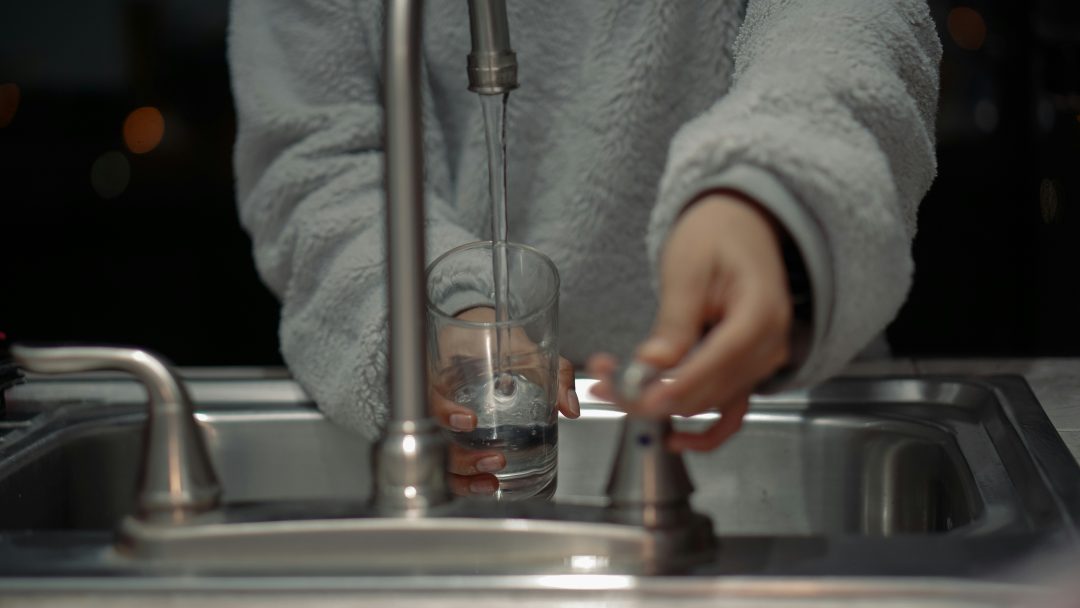
Water filtration is often added as a final step — under the sink, on the countertop, or directly at the tap. While point-of-use systems can improve drinking water quality, they are frequently installed after exposure has already occurred. This distinction matters more than most people realize.
Filtration Location Defines Exposure, Not Just Water Quality
Where a filter is installed determines which exposures it can actually influence. Point-of-use filtration treats only the water used for drinking or cooking. All other household water — for showering, bathing, handwashing, laundry, and cleaning — remains untreated.
This means that filtration may improve taste and ingestion quality, while leaving inhalation and skin contact exposures unchanged.
Exposure Begins Before the Tap
Waterborne substances do not wait for a glass. During showering or bathing, volatile and semi-volatile compounds can enter indoor air as steam or aerosols. During prolonged skin contact, certain substances can penetrate the skin barrier. These interactions occur upstream of point-of-use filters.
Filtering only the final outlet addresses consumption, not total exposure.
Whole-House Filtration Changes the Baseline
Whole-house systems treat water before it is distributed throughout the household. This alters the quality of water used for all purposes, reducing overall exposure across ingestion, inhalation, and dermal contact.
Rather than correcting water at isolated points, whole-house filtration reshapes the household water environment.
Why Point-of-Use Still Has Value
Point-of-use systems are not ineffective. They can provide targeted treatment where the highest ingestion volumes occur and allow for specialized media or fine polishing stages. Their limitation is not performance, but scope.
They solve part of the problem — not all of it.
Designing Filtration Around Exposure Pathways
Effective water treatment starts by identifying how water interacts with the body. If exposure occurs throughout the home, filtration placed only at the endpoint addresses symptoms rather than sources.
The question is not where water tastes best,
but where exposure actually happens.
Learn more at klar2o.com