
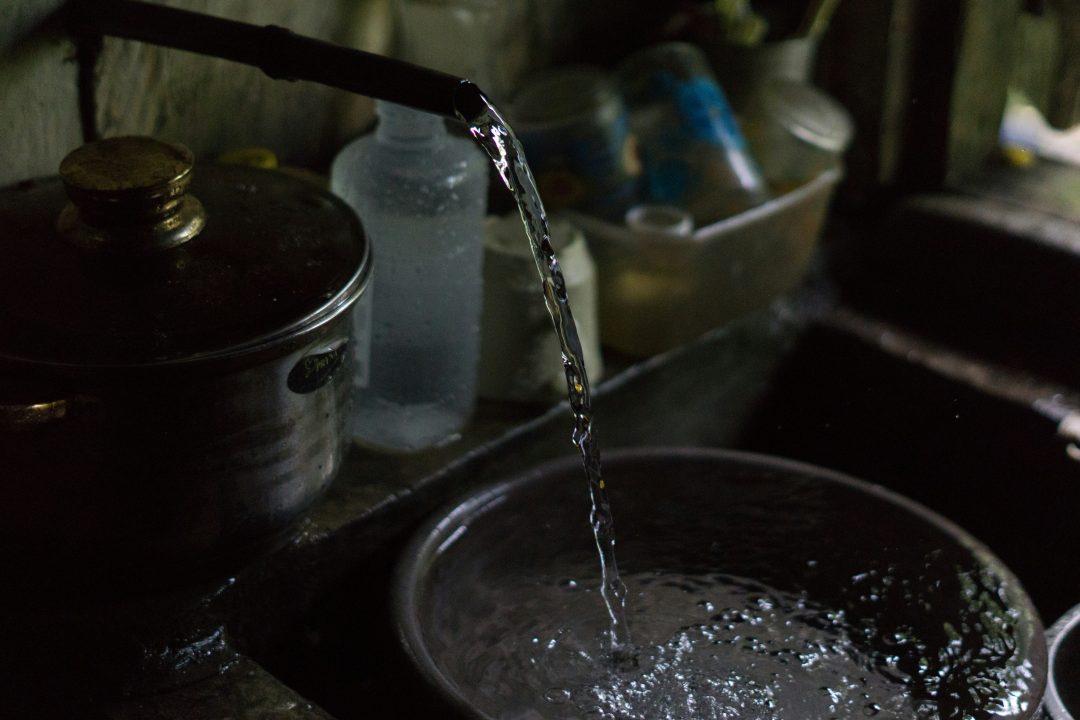
Drinking water is commonly understood as something we consume. In reality, it is one of the most consistent and multifaceted exposure pathways in daily life. Water enters the body not only through ingestion, but also through the skin and the respiratory system. These routes operate simultaneously, every day, often without awareness.
Ingestion Is Only One Part of the Equation
Consuming water is the most obvious exposure route. Small concentrations of dissolved substances are ingested repeatedly, day after day. While individual doses may appear negligible, long-term intake turns drinking water into a continuous background exposure.
What matters biologically is not a single glass, but the accumulation over years.
Inhalation Through Aerosols and Steam
Household activities such as showering, bathing, or washing dishes generate aerosols and steam. Volatile and semi-volatile compounds can transfer from water into the air and be inhaled. This exposure route bypasses digestive processing and allows substances to enter the bloodstream directly through the lungs.
Inhalation exposure is rarely considered in water quality discussions, yet it can be significant.
Dermal Absorption During Contact
Skin contact with water is frequent and prolonged, particularly during bathing. Certain chemicals can penetrate the skin barrier, especially when warm water increases permeability. While dermal absorption rates are typically lower than ingestion, the exposed surface area and duration make it a relevant pathway.
The skin is not an impermeable shield.
Why Combined Exposure Matters
Each exposure route alone may seem minor. Together, they form a continuous, multi-route interaction between waterborne substances and the body. Regulatory assessments often evaluate ingestion in isolation, while real-world exposure occurs through overlapping pathways.
Biology responds to the total burden, not to isolated routes.
The Household as a Constant Exposure Environment
Unlike food or air, water exposure is highly predictable and repetitive. It occurs multiple times every day in the same environment. This makes household water a unique and underestimated contributor to long-term chemical interaction.
Water quality decisions therefore influence more than taste or convenience.
Rethinking Water Safety
Understanding water as a daily exposure pathway shifts the focus from occasional testing to continuous conditions. Safety is not defined by a single measurement, but by how water interacts with the body over time.
Water is not just something you drink.
It is something you live with.
Learn more at klar2o.com