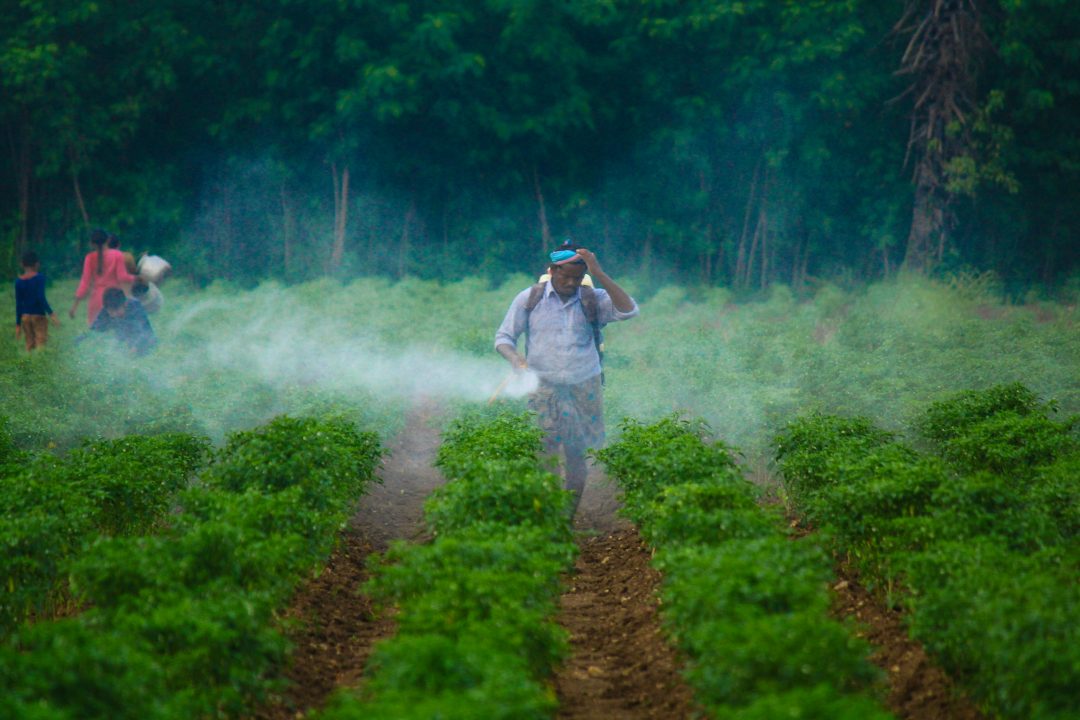
Agriculture depends on pesticides to control weeds, insects, fungi, and other pests. These substances help protect crop yield, but they do not always stay exactly where they are applied. Rainfall, irrigation, soil type, drainage, and groundwater movement can carry pesticide residues away from fields and into nearby water systems.
This is how agriculture can affect tap water. Pesticides can enter rivers, lakes, reservoirs, and groundwater that may later be used as drinking-water sources. The risk depends on the chemical used, how often it is applied, how persistent it is, and how easily it moves through the environment.
How Pesticides Reach Water
Pesticides can reach water through surface runoff and groundwater infiltration. Surface runoff happens when rain or irrigation water flows over farmland and carries residues into ditches, streams, rivers, or reservoirs. Groundwater infiltration happens when pesticides move through soil and reach underground water sources.
The pathway depends on local conditions. Sandy soils, heavy rainfall, shallow groundwater, sloped fields, and poor application practices can increase the chance of pesticide movement. Some pesticides break down quickly, while others persist longer and can travel further.
Key limitation: a pesticide applied on land can become a water-quality issue later.
Why Private Wells Can Be More Vulnerable
Private wells can be more exposed to local agricultural contamination than centrally treated water supplies. If a well is located near farmland, poorly sealed, shallow, or placed in vulnerable geology, pesticides may have a higher chance of reaching the water.
Unlike public water systems, private wells are usually the responsibility of the homeowner. This means testing, maintenance, and treatment decisions are not automatically managed by a water utility.
That is the hidden risk.
Well water can look clear and taste normal while still containing pesticide residues.
Why Taste and Appearance Are Not Enough
Pesticides in water are usually not detected by taste, smell, or color. Clear water does not prove that the water is free from chemical residues. A household may only discover a problem through proper water testing or official water-quality information.
This is why relying on sensory judgment is weak. Water can seem fresh and clean while still carrying trace contaminants from agricultural activity.
Key limitation: invisible contaminants require testing, not guessing.
Health and Safety Relevance
The health relevance of pesticides in drinking water depends on the specific pesticide, concentration, exposure duration, and sensitivity of the person drinking the water. Some substances may be more concerning for long-term exposure, while others may have lower risk at very low levels.
The main issue is not that every detected pesticide level automatically creates danger. The issue is that pesticide contamination should not be ignored, especially in agricultural regions or private-well households.
Safe drinking water requires knowing what is in the water, not assuming it is clean because it looks normal.
Can Water Filters Help?
Some filtration technologies can reduce selected pesticides, but not every filter is designed for this purpose. Activated carbon, reverse osmosis, and other advanced filtration systems may reduce certain pesticide residues depending on the chemical and system design.
But general filter claims are not enough.
A filter that improves taste or reduces chlorine is not automatically effective against pesticides. Performance depends on contaminant-specific testing, certification, contact time, filter capacity, water chemistry, and maintenance.
A poorly maintained filter can also lose effectiveness over time. For pesticide concerns, users should look for verified performance data instead of relying on broad “clean water” claims.
Control and Prevention Strategies
The first step is testing or reviewing local water-quality data. Public water users can check official water reports. Private-well users in agricultural areas should consider periodic testing, especially after heavy rainfall, flooding, pesticide application seasons, or changes in water taste or quality.
Filter selection should be based on the pesticide concern, not on generic filtration language. Cartridges should be replaced on time, systems should be maintained correctly, and users should avoid assuming one filter removes every agricultural contaminant.
At the larger scale, prevention matters. Responsible pesticide application, buffer zones, soil management, runoff control, and source-water protection help reduce contamination before it reaches water supplies.
Conclusion
Pesticides are important in agriculture, but they can become a drinking-water concern when they move from fields into surface water or groundwater. The risk is higher in areas with intensive farming, vulnerable soils, shallow wells, or poor source-water protection.
The main risk is false confidence. Water may look clear and taste normal while still containing pesticide residues.
Effective protection requires testing, source-water awareness, suitable filtration, and proper filter maintenance. Assuming that tap water is free from agricultural chemicals without evidence is technically wrong.
For more information, visit klar2o.de.