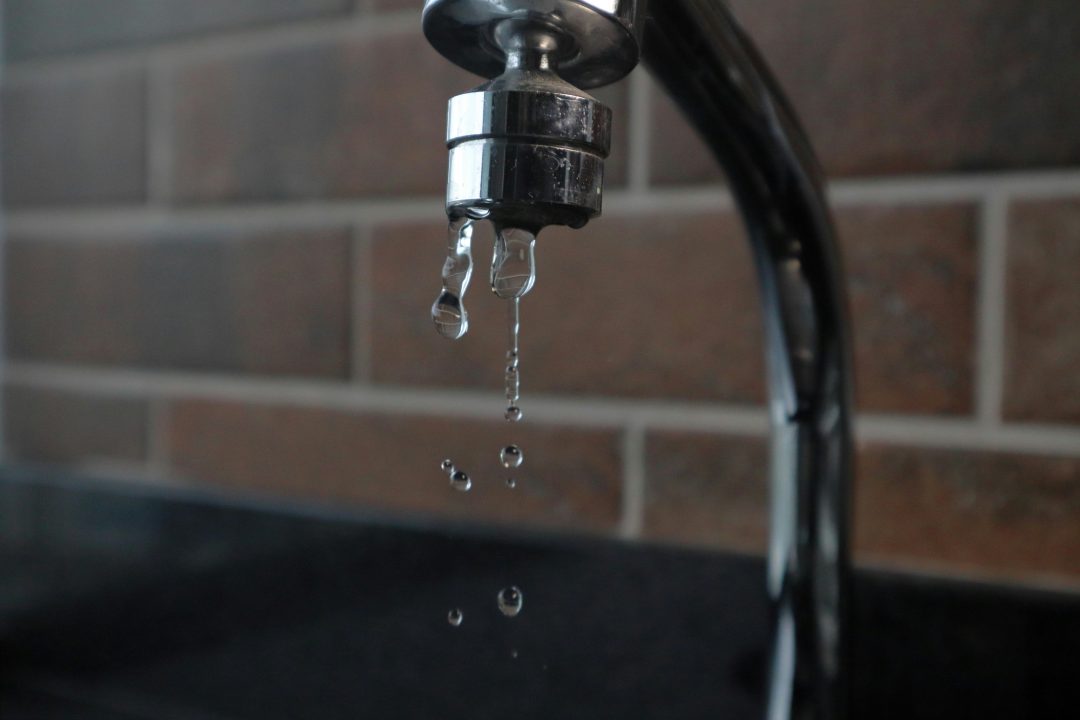
Kitchen pull-out faucets are convenient, but they are also one of the most underestimated contact points in household drinking-water hygiene. The risk is not the faucet concept itself. The risk comes from hose handling, spray-head contamination, internal surfaces, backflow potential, and poor maintenance.
Drinking water quality is not only determined by the public supply. It can change inside the domestic installation, especially at taps, outlets, hoses, valves, and other components that water contacts before use. Household systems contain many small components, and even compliant supplied water can be altered downstream of the building connection.
Why Pull-Out Faucets Matter
A pull-out faucet is not just a tap. It is a movable outlet with a flexible hose, spray head, aerator, seals, connectors, and retracting mechanism.
That creates more hygiene-relevant contact points than a fixed faucet.
The spray head can touch dirty sink surfaces, food residues, dishwater, cleaning water, or hands during cooking. The hose can be pulled into areas where normal faucet outlets would never go. If the outlet is left in contaminated water, pressure changes can create a backflow risk. Public water-safety guidance explicitly lists kitchen sink sprayers and hose-type outlets as potential household contamination sources when left in the wrong place or submerged in contaminated water.
Key limitation:
Clean tap water ≠ clean faucet outlet
Main Hygiene Risks
Spray-Head Contamination:
The spray head is frequently touched by wet hands, exposed to food residues, and positioned close to the sink drain. This makes it a high-contact surface, not a passive outlet.
Aerator and Nozzle Fouling:
Aerators and fine spray nozzles can trap particles, scale, and organic residues. These deposits create protected microenvironments where microbial growth can persist.
Backflow Risk:
If the spray head is submerged in dishwater, cleaning water, or a filled sink, a pressure drop can pull contaminated water back into the drinking-water system. Backflow prevention exists for exactly this reason: drinking-water installations must be protected from reverse flow from non-potable or contaminated liquids.
Internal Hose Stagnation:
Flexible hoses add extra internal volume. If water remains inside the hose for long periods, contact time increases and the first water drawn through the spray head may not represent fresh incoming water.
Incorrect Cleaning:
Wiping the outside of the faucet is not enough. The nozzle, spray plate, aerator, hose outlet, and retraction zone are the hygiene-critical parts.
Why Standard Monitoring Fails
Traditional water testing usually focuses on the water sample, not the faucet outlet as a contamination point.
This creates a blind spot.
A sample taken after flushing may look compliant, while the spray head, aerator, or hose outlet still carries deposits or microorganisms. Backflow-related risks are also intermittent because they depend on pressure events and user behavior.
Key limitation:
A clean water sample does not prove a clean outlet
Without checking the final contact point, hygiene risks at pull-out faucets can remain invisible.
Impact on Drinking-Water Hygiene
Health Risks:
Pull-out faucets can transfer microorganisms or residues from sink environments to the drinking-water outlet, especially when the spray head is handled incorrectly or left in contaminated water.
Taste and Odor:
Deposits inside the aerator or spray head can affect the first draw of water and create unpleasant sensory changes.
System Safety:
A missing or unsuitable backflow protection device can turn a local handling mistake into a system-level contamination route.
User Trust:
Consumers often blame the water supply or the filter when the real weak point is the final outlet.
Control and Prevention Strategies
Pull-out faucet hygiene requires correct installation, appropriate backflow protection, and disciplined use. The spray head should never be left submerged in dishwater, cleaning water, buckets, or filled sinks. Aerators, nozzles, and spray plates should be removed, descaled, cleaned, and replaced when deposits persist. The hose should retract fully and should not drag through contaminated sink areas. After longer periods without use, the faucet should be flushed before drinking or food preparation. In older kitchens or modified installations, a qualified installer should check whether the faucet and connected devices include suitable protection against backflow. The critical point is simple: the last component before the glass must be treated as part of the drinking-water system, not as ordinary kitchen hardware.
Conclusion
Kitchen pull-out faucets are not automatically unsafe, but they are often underestimated.
They combine drinking-water contact, manual handling, flexible hoses, spray nozzles, and proximity to contaminated sink areas. That makes them more hygiene-sensitive than standard fixed outlets.
Good drinking water can still be compromised at the final contact point if the spray head is dirty, submerged, poorly maintained, or insufficiently protected against backflow. Standard water parameters do not reliably capture this risk.
Effective control requires clean outlets, correct use, suitable installation, and regular maintenance.
Ignoring the pull-out faucet means ignoring the last surface your drinking water touches before it reaches the glass.
For more information, visit klar2o.de.