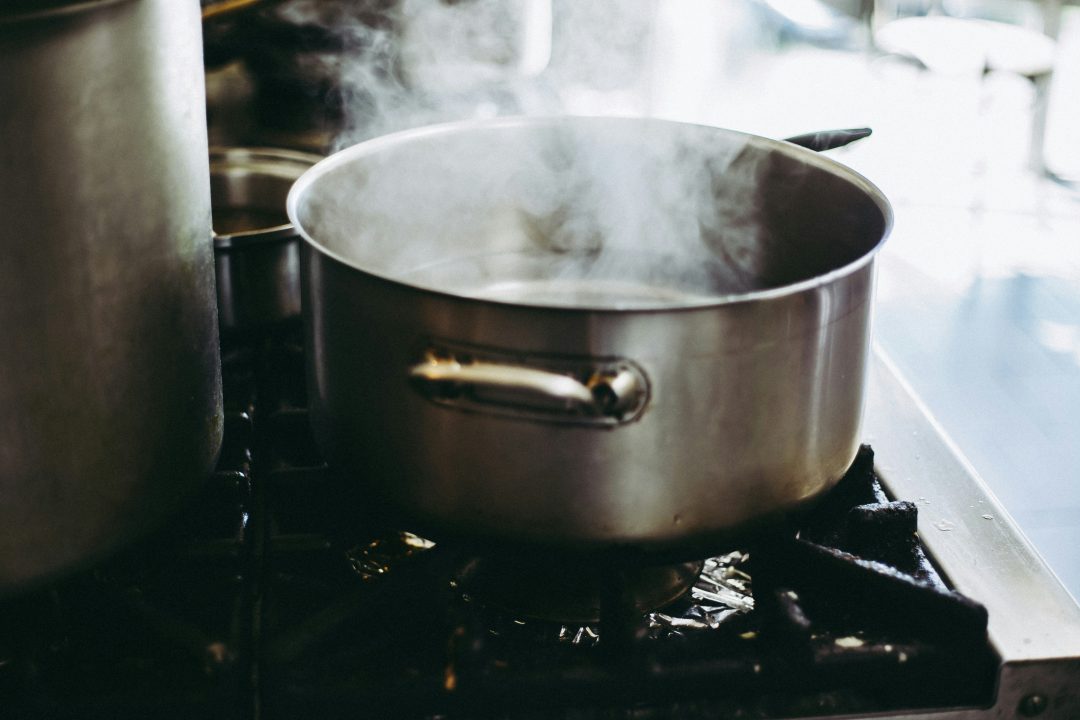
Boiling tap water is one of the oldest emergency treatment methods for drinking water. It is simple, fast, and effective against many biological risks. But it is often misunderstood.
Boiling does not make water “pure.” It mainly addresses microorganisms. It does not remove many chemical contaminants, and in some cases it can increase the concentration of substances that remain in the water after evaporation.
That distinction matters.
Why Boiling Matters
Boiling is useful when drinking water may be contaminated with disease-causing microorganisms. Heat can inactivate bacteria, viruses, and parasites, which is why public health agencies recommend boiling during microbiological contamination events or boil-water advisories. The CDC recommends bringing clear water to a rolling boil for 1 minute, or 3 minutes above 6,500 feet elevation.
Key limitation:
Boiled water ≠ chemically clean water
Boiling solves one category of risk. It does not solve all drinking-water problems.
What Boiling Can Solve
Microbial Contamination:
Boiling can reduce risk from bacteria, viruses, and parasites when water is suspected to be microbiologically unsafe.
Emergency Use:
After pipe breaks, pressure loss, flooding, or official boil-water advisories, boiling can be an appropriate short-term measure if authorities recommend it.
Short-Term Safety Gap:
Boiling can help bridge temporary failures in water safety when the main concern is biological contamination, not chemical pollution.
The important point is context. Boiling is a response to specific contamination scenarios, not a routine upgrade for normal drinking water.
What Boiling Does Not Solve
Boiling does not remove many dissolved chemicals from water. The CDC explicitly states that boiling does not remove chemicals, and household methods such as boiling, chlorination, and sunlight cannot remove chemical contaminants.
This includes risks such as:
Lead
Nitrate
Arsenic
PFAS
Pesticide residues
Some industrial chemicals
Dissolved salts and minerals
If the problem is chemical contamination, boiling is the wrong control strategy. In those cases, the solution is source control, certified filtration, alternative water, or professional treatment.
What Boiling Can Concentrate
Boiling removes water as steam. Many dissolved substances do not evaporate with it.
That means the remaining water can contain a higher concentration of non-volatile substances after prolonged or repeated boiling. Nitrate is a critical example: health authorities warn that boiling water is not a safe nitrate-control method because evaporation can make nitrate more concentrated.
Key limitation:
Evaporation removes water, not dissolved contaminants
This is especially relevant for private wells, infant formula preparation, and households with known nitrate issues.
Why Standard Assumptions Fail
Many people assume that boiling is a universal purification method.
That assumption is wrong.
Boiling targets biological contamination. Chemical contaminants require different treatment mechanisms, such as adsorption, ion exchange, membrane filtration, or distillation, depending on the substance.
A kettle cannot distinguish between safe and unsafe dissolved compounds. It only adds heat.
Impact on Household Drinking Water
Health Protection:
Boiling can reduce acute microbiological risk when water is contaminated with pathogens.
Chemical Exposure:
Boiling does not reliably reduce chemical exposure and may increase concentration for some dissolved substances.
Taste and Scaling:
Boiling can change taste by driving off dissolved gases and increasing mineral precipitation. This may create kettle scale but does not mean harmful contaminants have been removed.
False Security:
The biggest risk is behavioral. People may boil water and assume it is safe, even when the actual problem is chemical contamination.
Control and Prevention Strategies
Boiling should be used only when it matches the risk. If authorities issue a boil-water advisory for microbiological contamination, follow the official instructions and boil water for drinking, brushing teeth, food preparation, and ice-making. If chemical contamination is suspected or confirmed, boiling is not enough and may make some dissolved contaminants more concentrated. In that case, use an alternative safe water source or a treatment system certified for the specific contaminant. For private wells, regular testing is essential because nitrate, arsenic, pesticides, and microbiological contamination require different responses. For daily drinking water, filtration and monitoring should be selected based on the actual water-quality problem, not on the assumption that heat solves everything.
Conclusion
Boiling tap water is useful, but limited.
It can reduce microbiological risk in emergencies, but it does not remove many chemical contaminants. For substances such as nitrate, prolonged or repeated boiling can even increase concentration by removing water while leaving dissolved contaminants behind.
Boiling should not be treated as a universal purification method.
Effective drinking-water safety requires matching the treatment method to the actual risk: heat for microbes, certified filtration or alternative water for chemicals, and testing when the contamination source is uncertain.
Ignoring this distinction creates false security.
For more information, visit klar2o.de.